The People-Pleaser’s Guide to Saying No Without Anxiety
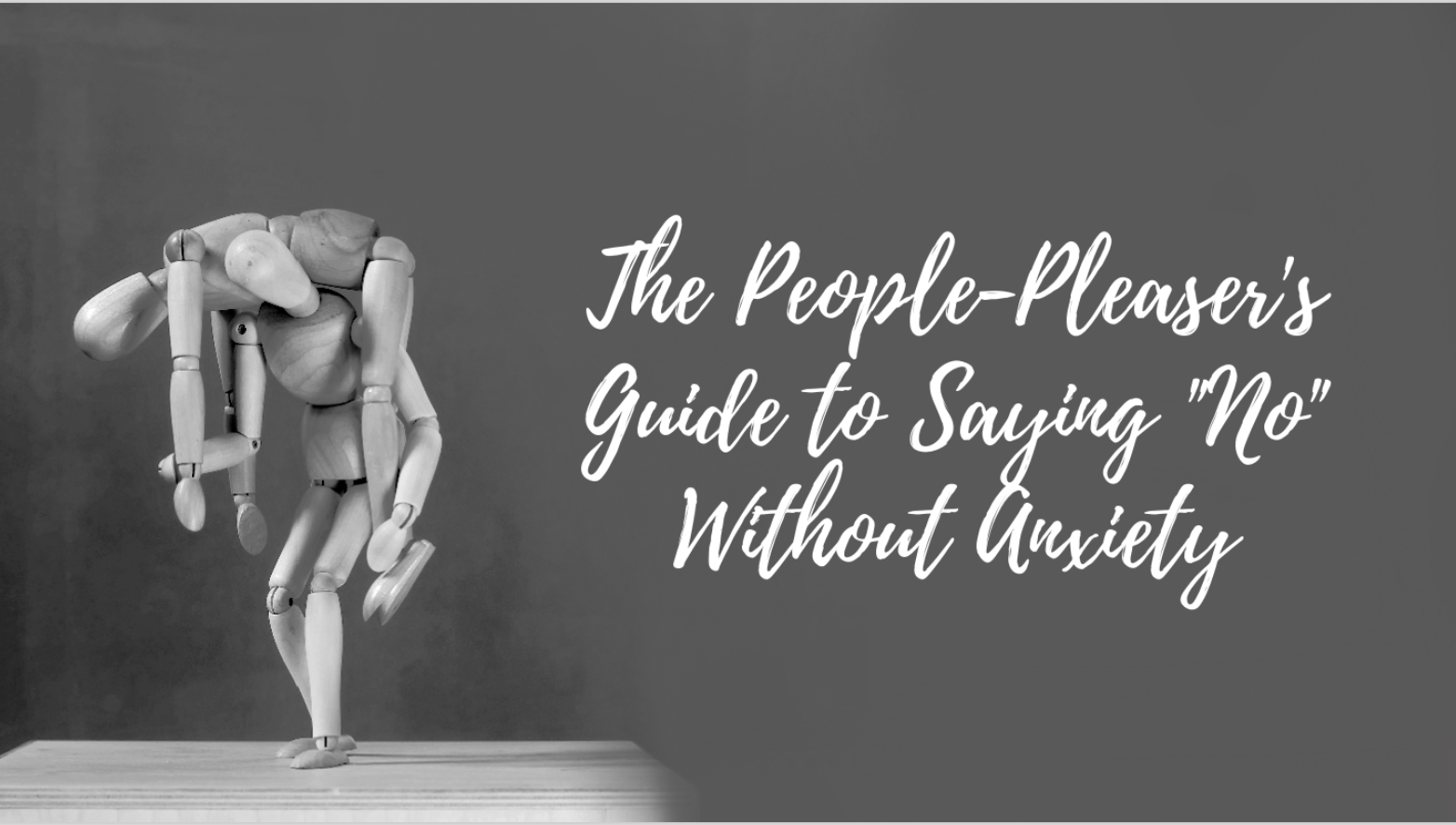
If you constantly find yourself saying "yes" to everyone else while quietly running on empty, you are not alone. For many women, the urge to keep everyone happy isn't just about being helpful—it is a deeply ingrained survival strategy. However, constantly choosing the comfort of others over your own well-being comes at a heavy cost.
The term 'People-Pleaser’ is laden with judgement - you don’t need yet another piece of kindling to fuel your inner critic’s fire! It’s important to recognise that this pattern developed as a coping tool, ingrained over a long time, and has been reinforced by societal gender norms. It’s not a personal flaw, rather a common approach to relating to others than no longer serves your physical and mental health.
Why is setting boundaries so difficult for people-pleasers?
Setting boundaries is difficult because people-pleasers have learned to conflate being "good" or safe with putting their own needs second. Asserting a limit with others triggers an automatic threat response, causing intense feelings of guilt or fear of relationship abandonment. This is especially true if one or more of our caregivers was regularly critical, short-tempered, or cold. You may have learned that to keep the peace, or to receive affection, you needed to ignore your own needs.
If you have spent a lifetime valuing yourself based on how much you can do for others, saying "no" can feel like a direct threat to who you are. A person-centred approach reminds us that your worth is inherent. You do not need to earn your place in relationships by being endlessly accommodating.
The Hidden Signs of Boundary Fatigue
When you override your own limits for too long, your mind and body will eventually start sending warning signs. Boundary fatigue is the emotional and physical exhaustion that comes from carrying everyone else's expectations.
How do I know if I am experiencing boundary fatigue?
Common signs you are experiencing boundary fatigue include:
Feeling deep resentment toward the people you are helping.
Experiencing a persistent sense of being invisible or unappreciated.
Feeling trapped by your own schedule and commitments.
Experiencing physical symptoms like a tight chest, exhaustion, or a constant state of low-level anxiety.
Resentment is often your internal compass telling you that your needs have been deprioritised. Instead of judging yourself for feeling resentful, try to view it with curiosity and compassion. It is simply a signal that your system is running out of fuel.
Shifting Your Perspective: Boundaries as Acts of Kindness
Clients often tell me that boundaries feel “selfish”. A boundary is not an act of rejection, a demand or an ultimatum. It is an act of clarity that preserves the relationship.
When you say a compassionate "no" to someone else, you are saying "yes" to your own mental well-being and capacity. It allows you to show up for others authentically when you do have the space, rather than showing up out of obligation, fear, or resentment.
Real life example: I have someone in my life who always prioritises everyone else’s needs, rarely expresses her own, and says “Yes” to every request. I actually find it difficult to ask her for anything because I can never trust that she’s answering authentically. Whereas I have other friends who have practiced boundary setting and are very good at saying “No” to a request if it doesn’t work for them. These are the friends who I can go to for assistance as I trust that they are authentically and enthusiastically showing up.
Boundaries improve the authenticity of your relationships.
Scripts for setting healthy boundaries in everyday relationships
Learning to communicate your boundaries can feel clunky and frightening at first. You can practice using these gentle, honest phrases that honor both your own limits and the other person's humanity.
For a friend or family member asking for a favour:"I really appreciate you coming to me, but I don't have the emotional capacity to give this the attention it deserves right now."
For a work or community request:"Thank you for thinking of me for this project. To ensure I maintain the quality of my current commitments, I need to pass on this opportunity."
For an invitation to a social event:"Thanks so much for the invitation. I need to pass on this one but please think of me for the next one."
When you need time to check in with yourself:"Let me check my capacity and get back to you by tomorrow. I want to make sure I can fully show up if I say yes."
This may not feel like your language so jot down a few phrases that feel more like you. Having pre-prepared script helps so much when the time comes for a “no”.
How do I deal with the guilt I feel when I say “No”?
The moment you say "no," you will likely experience a wave of anxiety or guilt. This is completely normal when setting boundaries is brand new. Focus on soothing yourself with self-compassion rather than changing your answer to a “Yes”.
A Self-Compassion Practice for the "Post-No" Guilt
The moment you say "no," you will likely experience a wave of anxiety or guilt. This is completely normal when setting boundaries is brand new.
When that wave hits, try a simple self-compassion pause:
Acknowledge the feeling: Gently say to yourself, "Right now, I am feeling a lot of guilt, and that feels heavy in my body."
Connect to shared humanity: Remind yourself, "Guilt is a completely natural response for someone who cares deeply about others and is only just starting to practice boundaries. Many women struggle with this exact feeling."
Offer yourself kindness: Place a hand over your heart or stomach and say, "May I give myself permission to rest. My needs matter too." What would you say to a friend in the same situation who was feeling “Post-No” guilt? Tell yourself this same thing.
Over time, you can learn to tolerate the temporary discomfort of guilt in order to protect yourself from the long-term exhaustion of burnout.
You might be interested in enhancing your quality of life, making the most of your potential, and becoming more comfortable in your own skin. Counselling can increase self-awareness, emotional skills, and coping tools so that you can be the best version of you. If you would like a supportive and confidential space to work through your concerns without judgement, I’d love to work with you.

by Jodie Arnot
Jodie is a PACFA Registered Clinical Counsellor with a Masters in Counselling from Monash University. She provides counselling in Camberwell, VIC or via telephone and Zoom, and is passionate about supporting women to no longer be at war with themselves.